There are moments in life that don’t seem important when they happen.
Then thirty years later, you realize they quietly changed the entire direction of your future.
Mine happened in a hotel penthouse overlooking Omaha.
At the time, I thought I already knew exactly what my future was supposed to be.
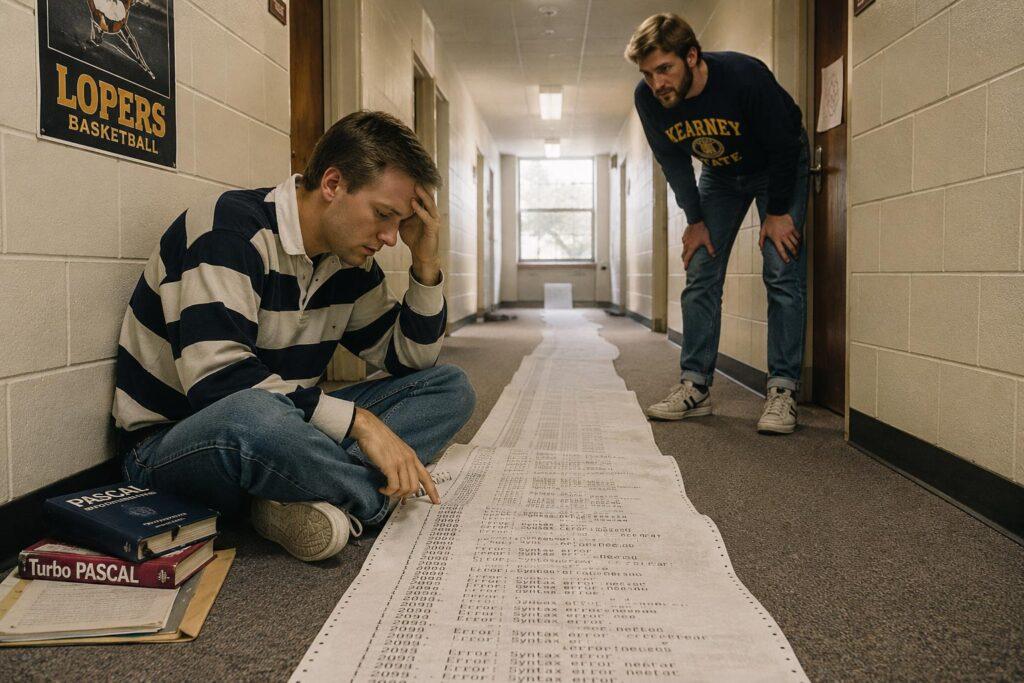
I was deep into Aviation Computer Science. Flying wasn’t the problem. I still love aviation to this day and still fly. But the computer science side and the government-track future attached to it slowly started feeling like a life I was supposed to want instead of one I actually wanted.
The creative side of me just wouldn’t shut up.
Art had always followed me around anyway.
I drew constantly growing up. Superheroes. Logos. Random concepts. I’d even had artwork displayed at the Joslyn Art Museum when I was younger and had already stumbled into a little print advertising work before I fully understood that was even a career path.
But graphic design?
Real graphic design?
I was nowhere near that level yet.
So I switched majors at Kearney State College and suddenly found myself surrounded by people who seemed born to do this.
Real designers.
The kind who understood typography, layout systems, color theory, and presentation boards before I even fully understood what the profession actually was.
Then came the portfolio review.
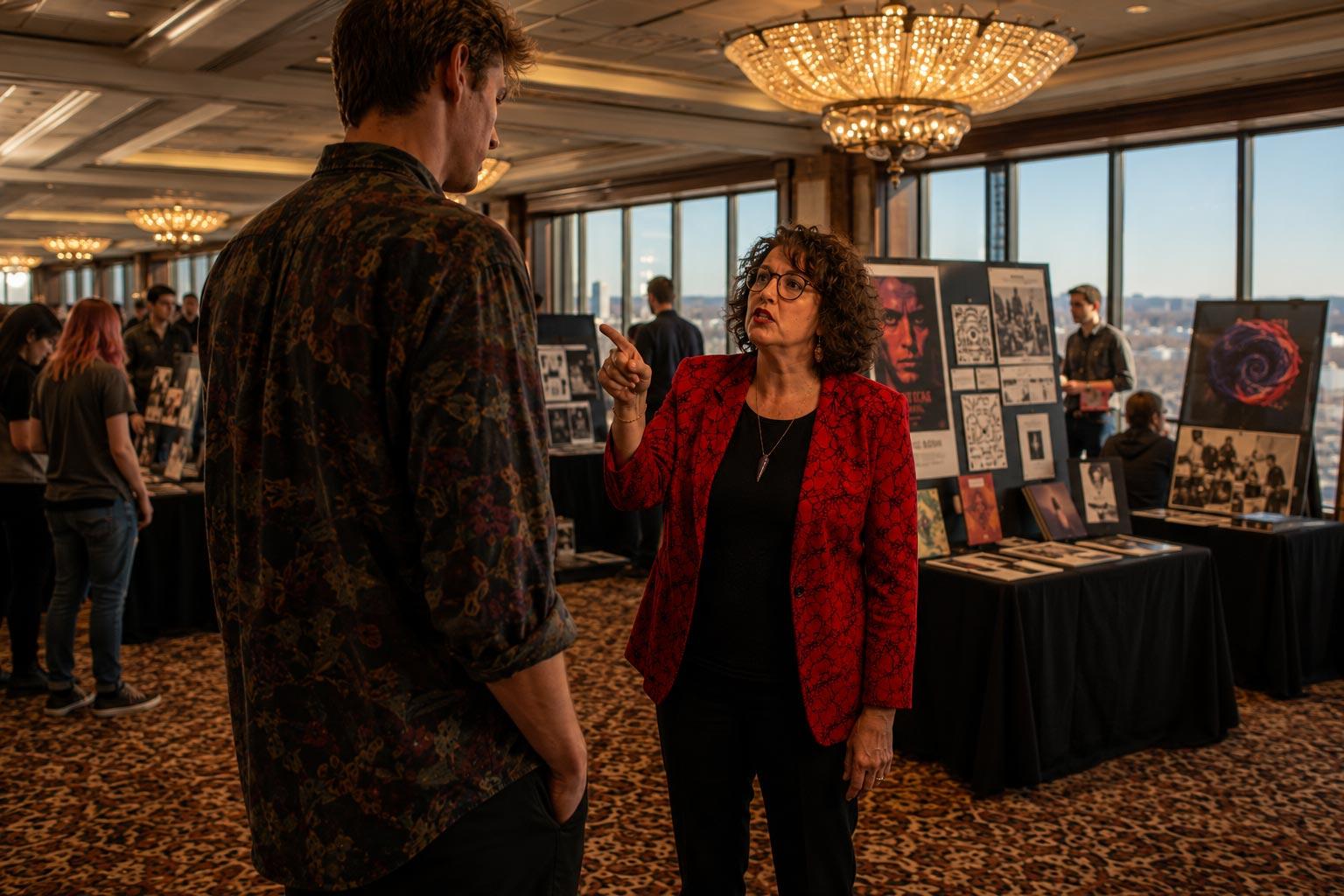
Every design student within what felt like a hundred miles of Omaha packed into the penthouse suite at the old Red Lion Hotel. Huge presentation boards leaned against walls. Carefully mounted typography pieces. Logos. Packaging systems. Advertising campaigns.
It was intimidating as hell.
Some of the work looked like it came straight out of New York agencies.
Then there was me.
I didn’t even fully understand what a professional portfolio was supposed to look like yet.
I just gathered every remotely artistic thing I had ever made, shoved it into a portfolio case, and hoped personality could somehow compensate for experience.
Kent Smith, the head of the department, encouraged me to go anyway.
“You gotta start somewhere.”
So I did what I knew how to do.
I talked to people.
Most of the reviewers were kind about it. Honest, but encouraging. They’d point at a piece and explain how it could be adapted into commercial design work. They treated me like a beginner.
Which I was.
Then I got reviewed Paula.
Owner of Paula Presents!
And she absolutely unloaded on me.
No soft landing.
No “keep working at it.”
No “you’ve got potential.”
Just a direct hit.
“You don’t have a future in this field.”
I don’t remember her exact wording after all these years, but I remember exactly how it felt.
Humiliating.
Sharp.
Final.
Like somebody had already decided my story before I’d even started writing it.
Now where I grew up, those weren’t just critical words.
Those were fightin’ words.
That wasn’t feedback anymore.
That was a challenge.
And from that exact moment forward, I became completely obsessed with proving her wrong.
Not publicly.
Not dramatically.
Quietly.
Relentlessly.
I stayed in the program.
I worked harder.
I got better.
Eventually I made it onto the Design Practicum team at Kearney State, the capstone-level group that handled real-world client work, branding systems, publications, production consulting, and professional-level design execution before graduation.
That program changed me.
Because suddenly this wasn’t pretend anymore.
The work mattered.
Clients mattered.
Deadlines mattered.
And somewhere during all of it, confidence slowly replaced insecurity.
After graduation I landed a job at a place called Leopard Productions.
As a graphic designer.
A few months later I was promoted to Art Director.
And that was the beginning of everything.
Agency life.
Advertising.
Branding.
Campaigns.
Long nights.
Pitch meetings.
Awards shows.
Eventually national recognition.
Work featured in publications like Communication Arts, AIGA, and PRINT.
Then came more companies.
More leadership roles.
And eventually my own company, Brandscapes.
Every once in a while, though, I still think about Paula.
And honestly?
I still don’t know whether I should send her a thank-you card…
…or a framed copy of my curriculum vitae.
Because the strange truth is this:
She was completely wrong about my future.
But she may have accidentally created it.
If this resonated with you, you’re not alone.