A few nights ago I was visiting with our neighbors.
Loren is a retired farmer from Minnesota. His wife is a retired postwoman.
Somewhere during the conversation, Loren started telling a story about farm chemicals.
Before he was halfway through it, I was eight years old again.
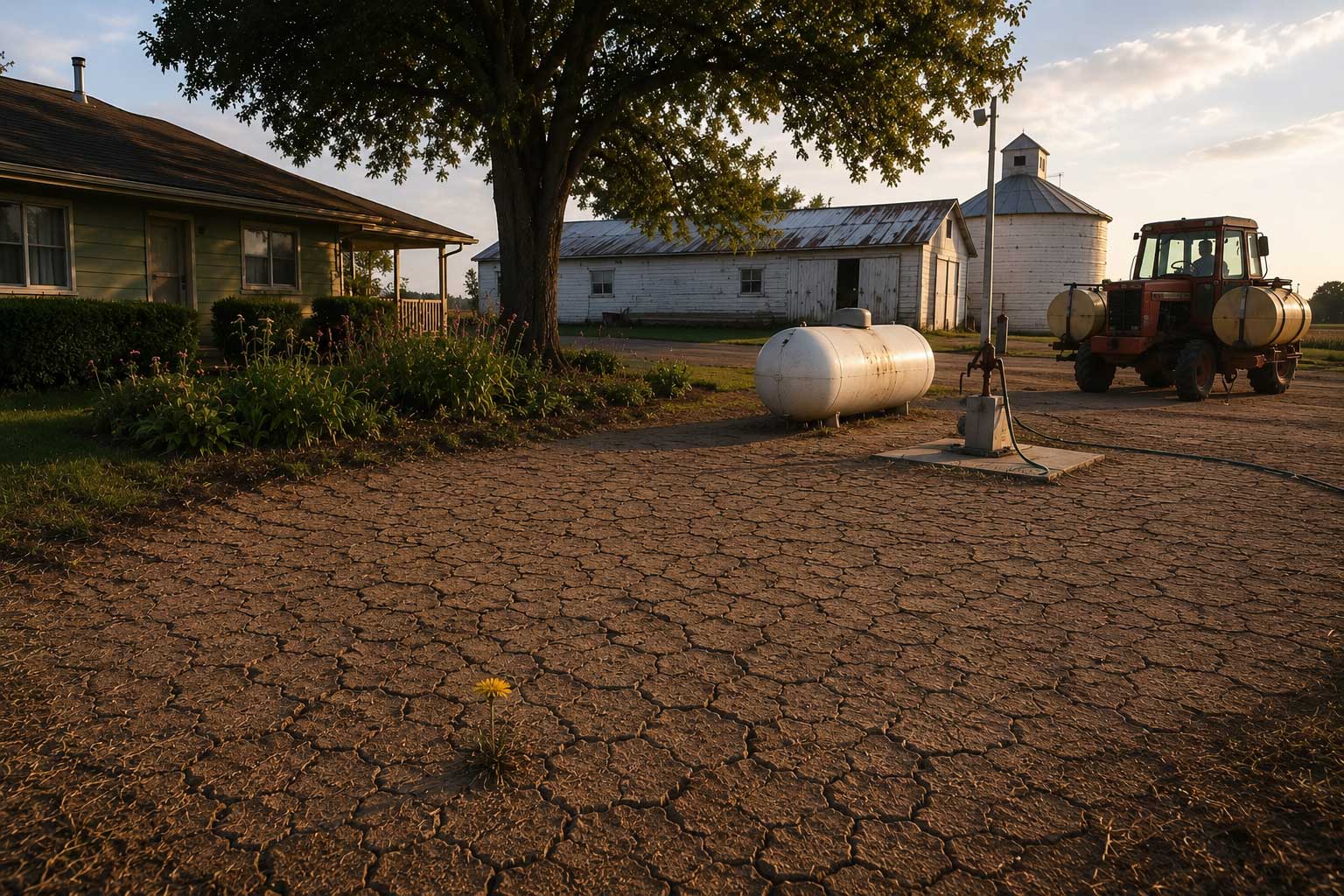
Behind our farmhouse there was a patch of ground where nothing grew.
Not grass.
Not weeds.
Nothing.
It sat just a few steps from the house, next to Mom’s garden, beside the water hydrant we used to wash equipment, and near the thousand-gallon propane tank that heated our water and helped warm the house during Nebraska winters.
Everything around it was alive.
The garden grew.
The grass grew.
The weeds grew.
But this one patch of ground looked like someone had forgotten to finish the planet.
I was probably seven or eight years old when it happened.
Dad had returned from spraying and brought the tractor back to the farm. It was the same International 1566 tractor I wrote about in another story. Mounted on each side were large chemical tanks.
After a day in the field, the tanks needed rinsed.
Dad pulled up to the hydrant and washed them out.
The chemical was Atrazine.
The rinsate soaked into the ground.
And for the next ten years, absolutely nothing grew there.
As a kid, I didn’t think much about it.
Every farm has odd landmarks.
There are trees everyone recognizes. Buildings with stories attached to them. Pieces of equipment that have sat in the same spot for years.
Our farm had the dead patch.
It became part of the scenery.
When friends came over, nobody said, “What’s wrong with that dirt?”
Because when you see something every day, eventually it stops looking strange.
It simply becomes normal.
Looking back, what amazes me isn’t that the chemical killed everything.
It’s how long the evidence remained.
Dad probably spent fifteen minutes rinsing those tanks.
That was it.
A routine chore at the end of a workday.
Yet the result sat there for the next decade like a permanent reminder.
I don’t remember the actual day he rinsed the tanks.
I don’t remember what I was doing.
I don’t remember what the weather was like.
What I remember is the years afterward.
The empty patch.
The dusty soil.
The absence of life where life should have been.
Funny how memory works.
We rarely remember the moment something changes.
We remember living with the result.
I hadn’t thought about that patch of ground in decades until Loren brought it back.
The patch is long gone now.
Grass eventually returned.
The farm changed.
Time moved on.
But I still remember standing there as a boy, staring at a place where nothing grew and wondering why.
Maybe that’s why the memory stayed with me.
Not because of the chemical.
Not because of the tractor.
But because it was one of the first times I realized that some things last far longer than the moment that created them.
If this resonated with you, you’re not alone.