There were two seconds left on the clock.
We were ahead by one.
And we were going to state.
At least we should have been.
It was the 1983–84 basketball season, my senior year at Tekamah-Herman High School. Basketball had been a big part of my life for years, and we had a good team.
The year before, we’d gone 17–4. My senior year, I was averaging 17 points a game and led the team in scoring and rebounding.
I also led the team in fouls.
That part won’t surprise anyone who knows me.
Off the court, I’ve never been particularly aggressive. Put me on a basketball court and apparently I became someone who needed regular reminders that there were rules.
Our district championship game was against the Arlington Eagles.
We knew them.
We’d beaten them by more than 20 points during the regular season.
But this wasn’t the same Arlington team we’d played before.
They’d adjusted.
They concentrated more of their defense on Todd Wragge and me and changed the way they played us. Nobody on our team was having a bad game. Arlington had simply figured out how to make things difficult.
And they stayed with us.
Late in the game, I did something else I had become pretty good at.
I fouled out.
There was about a minute and a half left, so whatever happened from there, I was going to watch it from the bench.
With the game coming down to the final seconds, one of our guys—I think it was either Jeff Thode or Greg Grass—scored and put us ahead by three.
Arlington came back down the floor and scored.
Now we were ahead by one.
There were two seconds left.
That should have been the game.
When a basket is made, the other team has five seconds to inbound the ball. We had possession underneath Arlington’s basket.
We didn’t need to pass it.
We didn’t need to run a play.
We didn’t need to do anything.
There were only two seconds left.
Just stand there holding the basketball.
Two seconds later, Tekamah-Herman would be going to the state tournament.
Then our coach, Dave Raabe, called timeout.
Our bench couldn’t believe it.
Neither could our fans.
They started screaming.
We went into the huddle, and Coach told us he wanted to calm everyone down.
Greg Grass was our point guard and probably the most vocal one of us.
He immediately called Coach out.
We have five seconds to inbound the ball.
There are only two seconds left.
We don’t have to do anything.
He was right.
Everybody knew he was right.
But the timeout had already been called.
And now Arlington had time to prepare.
They could talk about what we might do. They could set their defense. They could pressure the inbound pass.
Two seconds had stopped being something we simply had to wait out.
Now we had to play them.
Todd Wragge stood out of bounds underneath Arlington’s basket with the ball.
He was trying to get it to Greg.
An Arlington defender was in front of him waving his arms like he was on fire.
Todd tried to get the pass through.
The defender intercepted it cleanly.
The ball bounced directly underneath the basket.
Arlington picked it up and scored.
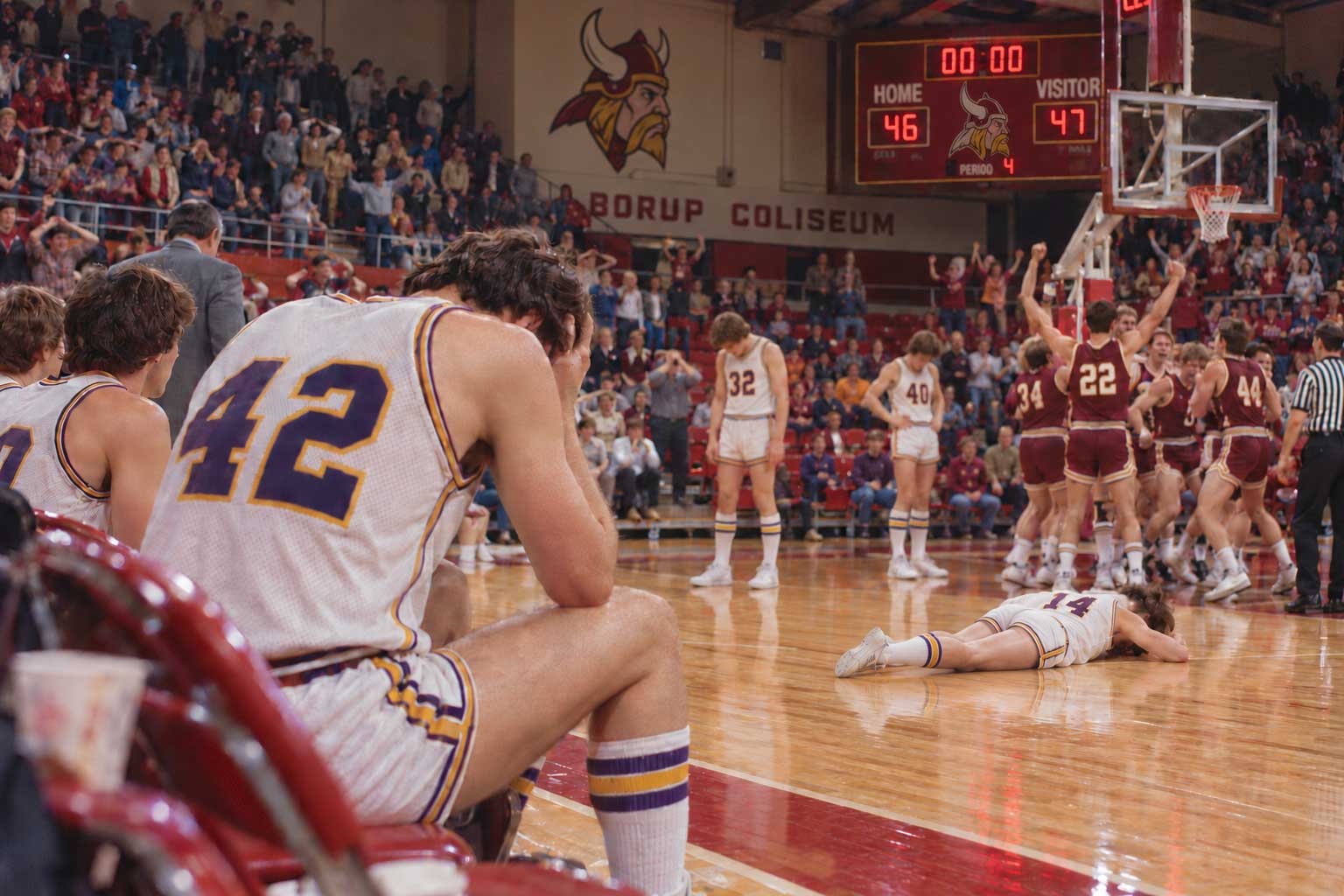
Game over.
I was sitting on the bench.
My head dropped into my palms.
I was about to cry.
Todd stood there with his head down and his hands on his hips.
Greg fell to the floor and just stayed there.
Arlington’s players and fans went crazy.
Ours stood in shock.
We had been two seconds from the state tournament.
Now our season was over.
For a high school basketball player, going to state is one of the biggest goals there is. You don’t think about it as some nice memory you’ll have when you’re older.
You want to win.
You want to go to state.
You want a championship.
And if you’re hoping to play college basketball, a run at the state tournament doesn’t exactly hurt your chances of getting noticed.
So it hurt.
Badly.
But I never blamed Todd.
We’re still friends today.
He didn’t want to throw that ball to an Arlington player. He wanted to go to state every bit as badly as I did.
He was simply put in a situation we never should have been in.
I don’t know whether Todd blamed himself afterward.
I do know Coach Raabe blamed himself.
We all knew he’d made a mistake. There wasn’t much reason for us to keep saying it.
Our fans handled that part for us.
Some of them never let him forget it.
I graduated that spring, and Tekamah-Herman had a different basketball coach the following season.
More than forty years have passed since that game.
The funny thing is, I don’t spend much time thinking about it.
I went on to play college basketball at Kearney State. I kept playing basketball afterward, finding pickup games and weekly leagues wherever I could for another thirty years.
Eventually my body made the retirement decision for me when I ruptured my Achilles tendon playing in an alumni tournament.
Apparently fouling me out was no longer sufficient.
Every once in a while, though, I’ll run into someone on a golf course who remembers that Tekamah-Herman team.
Sometimes it’s one of my friends’ parents.
They’ll tell me we were the best team Tekamah-Herman ever had.
And eventually somebody will bring up Arlington.
The timeout.
The inbound pass.
Those two seconds.
For a long time, I suppose there was a what-if attached to them.
What if Coach hadn’t called timeout?
What if we’d gone to state?
What if we’d won there?
Would more colleges have noticed me?
Would anything afterward have turned out differently?
Maybe.
But that’s the strange thing about looking back from sixty instead of eighteen.
At eighteen, those two seconds felt like they had changed everything.
They hadn’t.
I still played college basketball.
I kept competing long after anybody was keeping score in a high school gym.
Sports gave me things that lasted much longer than any tournament would have: toughness, competitiveness, the ability to stand up for myself, and an understanding that sometimes you can do everything right and still lose.
My coaches taught me some of those things.
My teammates taught me some.
My parents taught me plenty.
And occasionally, I suppose, you learn something from a timeout that never should have been called.
Forty-two years later, I don’t wish I could go back and change my life.
I like the life that came afterward.
But give me those two seconds back?
Yeah.
I’d take those.
If this resonated with you, you’re not alone.